Cross-selling and up-selling: definitions and tips to boost your sales

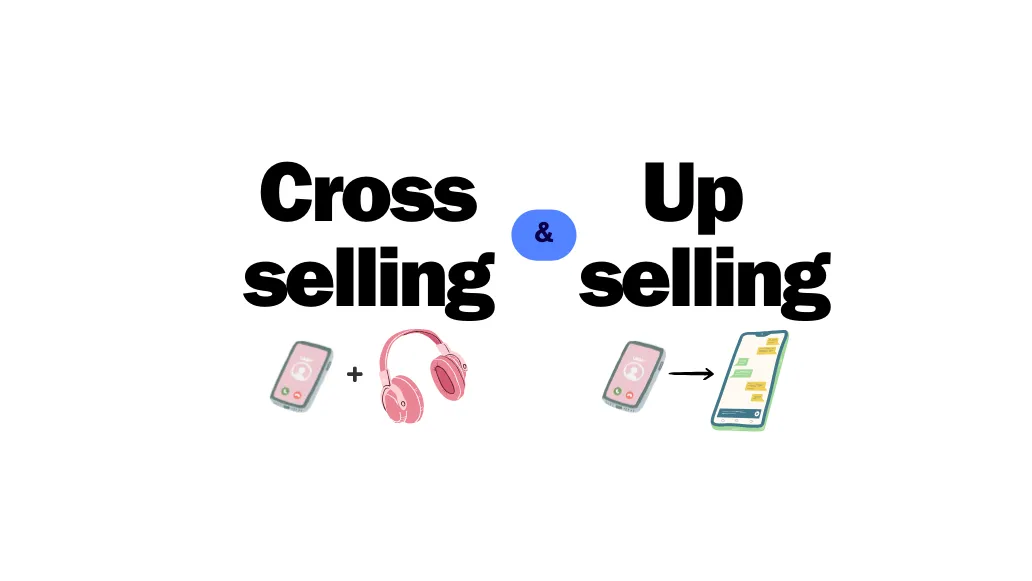
Up-selling means encouraging your customers to buy a higher-end solution, while cross-selling encourages them to buy complementary solutions.
These strategies are particularly effective for increasing average order value and customer lifetime value (CLV), and thus multiplying your sales.
By understanding how and when in the buying journey to use cross-selling and up-selling, you can maximize your chances of success.
That is what this article covers, so you have everything you need to run successful campaigns.
What is cross-selling?
Cross-selling defined
Cross-selling consists of offering products or services that complement a customer's main purchase. This practice increases sales by delivering more value to the customer.
For example, if someone buys a phone, you can suggest adding earphones or a protective case.
This practice is common online, where purchase suggestions can appear on product pages, as on Amazon. The idea is to maximize the value of the shopping cart by encouraging the purchase of additional items that increase the usefulness or enjoyment of the initial product.
Benefits of cross-selling
The main benefit of cross-selling is higher revenue. By offering related items, you can turn a simple purchase into a more profitable transaction.
It also helps improve the customer experience, since recommendations can meet needs the customer had not thought of.
In addition, cross-selling can strengthen customer loyalty: by showing that you understand their needs, you build a relationship of trust that can encourage future purchases.
This strategy can also help reduce customer acquisition costs by maximizing the value of each transaction.
By showcasing your products, you optimize your sales while increasing the perceived value of the offer for the consumer.
What is up-selling?
Up-selling defined
Up-selling is a sales strategy in which you encourage a customer to buy a more expensive or premium version of a product they are already considering. This technique focuses on increasing the value of the sale by offering options with more features or capacity.
Going back to the earlier example of buying a phone, you could offer a model with more storage or a better camera, depending on the buying criteria that matter most to the customer.
This method relies on the idea that a customer who is already interested will be easier to convince to choose an upgraded version.
But a good upsell always offers additional value that better meets the customer's needs or wishes.
Benefits of up-selling
Up-selling has many benefits. Here are the main ones:
- Increase your revenue without needing to attract new customers.
- Strengthen the customer relationship by better meeting their needs.
- Generate greater satisfaction and loyalty
- Lower your acquisition costs, since you increase the purchase amount.
How to run successful up-sell and cross-sell campaigns
Analyze the voice of the customer
Understanding your customers' sentiment and needs is essential to the success of your cross-selling and up-selling strategies. Listening to the voice of the customer improves customer satisfaction and retention through better-targeted offers.
You can use feedback tools to gather reviews and suggestions from customers. You can also rely on artificial intelligence technologies such as Batvoice's speech analytics to capture and analyze data from your contact center calls.
This customer data provides valuable insight into what consumers really want, so you can adapt your offers and personalize your recommendations.
Offer relevant products
Offering the right products at the right time is decisive. Base your recommendations on your customers' purchase history and buying behavior to suggest complementary or premium products that suit them.
For example: if someone wants to buy a coffee machine, offer them coffee capsules.
Product recommendations should improve the customer experience and encourage purchase, while staying relevant to the needs identified.
Don't offer too many choices
Too many choices can be confusing for customers. You need to limit the options you offer, because when customers have too many alternatives, they can feel overwhelmed and choose not to buy anything.
Simplify your offer by highlighting the most relevant products. This makes the decision process easier and increases the likelihood that your offers will be accepted.
Highlight the benefits of your up-selling or cross-selling offers
It is essential to clearly explain the advantages of your offers so the customer understands their added value.
To do this, emphasize how the additional or higher-end product will better meet their needs.
For example, highlighting the savings made or the increased performance can spark the customer's interest if those buying criteria matter to them.
The idea is to make the customer understand that your up-sell or cross-sell offers genuinely aim to meet their needs, which strengthens their satisfaction and loyalty.
Bundle complementary products or services
In add-on sales, bundles encourage purchase by increasing the perceived value of the offer. This technique helps convince the customer to buy several items at once, increasing sales volume.
For example, you can offer a mobile plan with a discount on the purchase of a phone.
This kind of bundled offer lets customers see an economic and practical advantage compared with buying these products or services separately.
Train your contact center agents in cross-selling and up-selling
Your contact center agents play a key role in the success of your campaigns. Well-informed agents can turn a simple interaction into an opportunity for sales growth.
Make sure they understand the importance of the approach and are trained to use these sales methods in their interactions with customers.
They need to know your products inside out and know how to present them in an attractive way that is tailored to customer needs.

Examples of cross-selling and up-selling throughout the buying journey
When selecting or discovering a product or service
When your customer chooses, or is about to choose, a product or service, it is the ideal moment to offer higher-end alternatives or complementary solutions.
For example:
- In e-commerce: if a customer has selected a laptop, offer a model with better performance or a higher-quality screen.
- In a call center: when a customer calls to ask about a basic mobile plan, the agent can offer a plan with more data or international calls included.
- In store: if a customer is trying on a pair of shoes, suggest matching socks or a shoe care product.
Before completing the purchase
Before checkout, whether online, in store or through a call center, you have several ways to suggest complementary items or services:
- In e-commerce: if someone has added a phone to their cart, offer accessories such as a protective case or a charger.
- In a contact center: during a call to finalize an order, the agent can offer complementary products or services, such as a VPN subscription alongside an internet subscription.
- For SaaS software: before finalizing the purchase of a monthly or annual subscription, offer additional or more powerful modules and extensions.
Cart page or order summary
The cart page or order summary is an excellent place to include cross-selling and up-selling offers before checkout:
- In e-commerce: display suggestions based on purchase history or on products frequently bought together, such as music albums with a CD player.
- In a contact center: when a customer calls to confirm their hotel booking details, the agent can offer additional services such as an airport transfer or breakfast included.
- In store: at the checkout, offer batteries for an electronic toy or memory cards for a camera.
Checkout process
During checkout, whether online, in store or by phone, include limited-time offers to encourage customers to add items to their purchase by creating a sense of urgency:
- In e-commerce: offer a discount for the immediate purchase of a complementary item.
- In a call center: mention limited-time promotions on accessories or additional services.
- In store: offer a small discount on a second similar item, such as a second book at half price.
After the purchase
Once the purchase is complete, offer related products or services in a post-purchase email sequence or at delivery to encourage future visits to your website or store.
For example:
- In e-commerce: send a confirmation email with suggestions for complementary products, such as matching socks after a shoe purchase.
- In a contact center: send a follow-up email with recommendations for complementary products or services based on the initial purchase.
- In store: include discount coupons for complementary products, such as accessories or cookbooks after the purchase of a food processor.
The risks of a poorly managed cross-sell and up-sell campaign
When using these sales techniques, it is important not to make offers that are irrelevant to customers' initial needs and wishes.
In up-selling, if customers feel you are trying to make them buy more expensive products with no real added value, they may feel manipulated and lose trust in your brand.
Add-on sales, if misused, can distract attention from the main product. This can lead to lost sales if customers feel pressured to buy items they don't need or spend too much time comparing all the additional options.
Misleading use of limited-time offers can also cause problems. If customers sense that scarcity is artificial, your brand's credibility could suffer. You risk irritating your customers and pushing them to turn to your competitors.
It is therefore important not to overuse these methods for manipulative purposes, and to keep your up-sell and cross-sell strategies well balanced.